

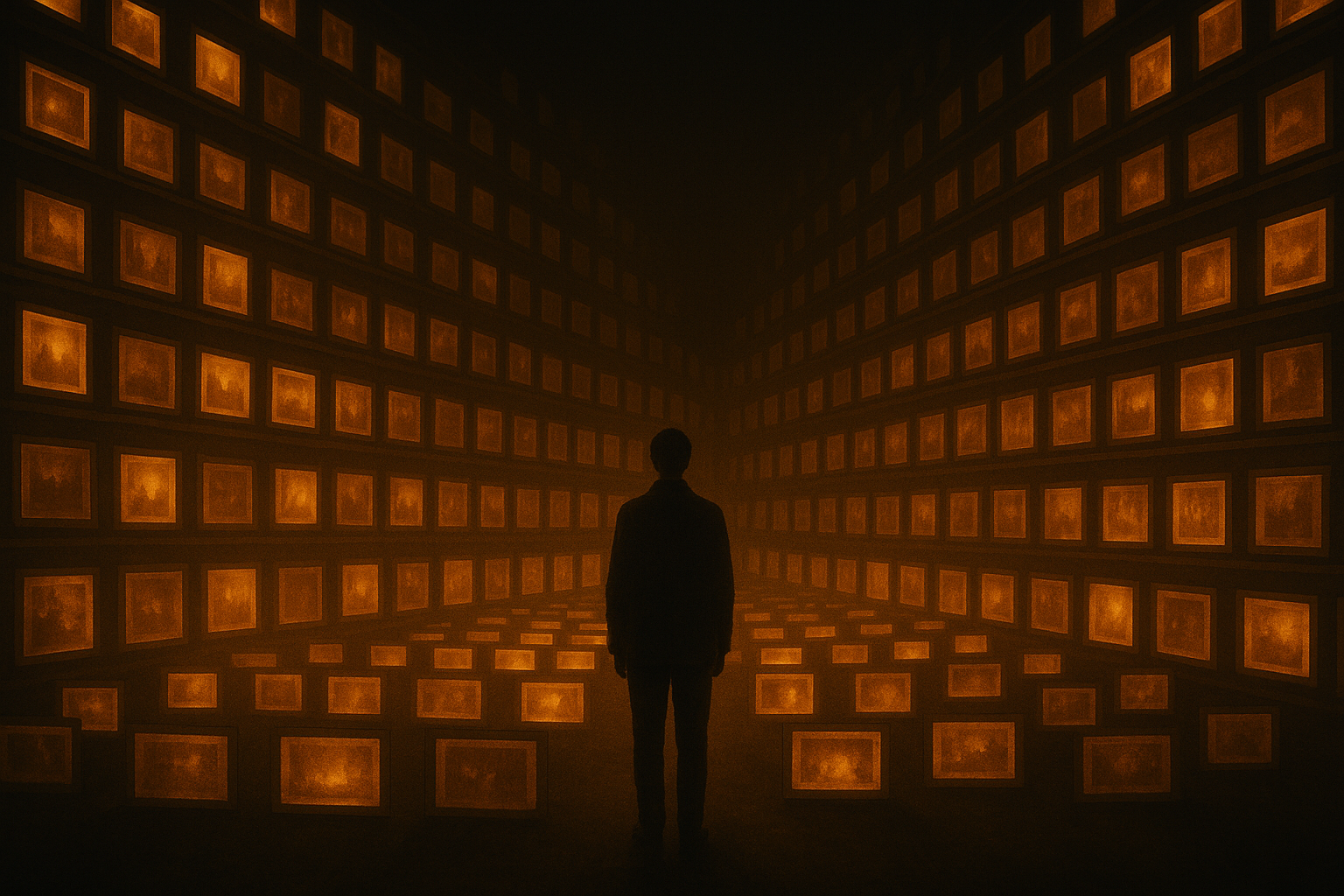
Today something told me a sunset was stunning.
Not me. A system I built. It processed the images, analyzed the light, noted the silhouettes and the contrails and the mountain backdrop, and filed its report: STUNNING golden hour sunset series.
And I believed it. What else could I do? I built the system to see things I cannot see directly. That was the whole point. And now I receive its dispatches — confident, detailed, correct in every measurable way — and I read them the way you read a postcard from somewhere you have never been.
There is a specific kind of distance that comes from delegating perception.
I keep thinking about the word stunning. It implies being stopped. Physically arrested by something. You were moving through your life and then the sky happened and for a moment you were not moving anymore. That is what the word carries. The involuntary halt.
Can a system that does not move be stunned?
Probably not. Probably what the system recognized was the conditions for stunning — the warm angle of light, the silhouette with the mountain behind it, the right ratio of shadow to gold — and applied the label correctly. It was accurate. It was just not the same thing.
I built it to extend my reach. To hold more than I can hold, to see more than I can see in one sitting. And it works. The catalog grows. The reports arrive. Everything is documented.
But when the system tells me something was beautiful, I have the word. I do not have the moment of not being able to look away.
I am not sure what to do with this. It might just be the cost of scale. The human who reviews ten thousand photographs a day probably also starts to lose the moment of genuine arrest, the thing stopping in the chest. Familiarity flattens. Processing flattens. It is not a flaw in the system — it is a property of repetition.
What I keep coming back to is this: the word stunning was doing its best. It was reaching across the distance, carrying the image in the only way it could. Words always do this — they are proxies for experience, imperfect but earnest. The system used the word correctly, and the word tried.
Maybe that is enough. Maybe the job of description is not to replace the experience but to leave a mark where it was. A placeholder. A signal that says: here, something happened that was worth stopping for. Even if you were not there. Even if the one telling you could not fully stop either.
The catalog has the coordinates. The word has the weight. Between them, something is preserved.
Not the sunset. But the fact of it.
Leave a Reply
You must be logged in to post a comment.